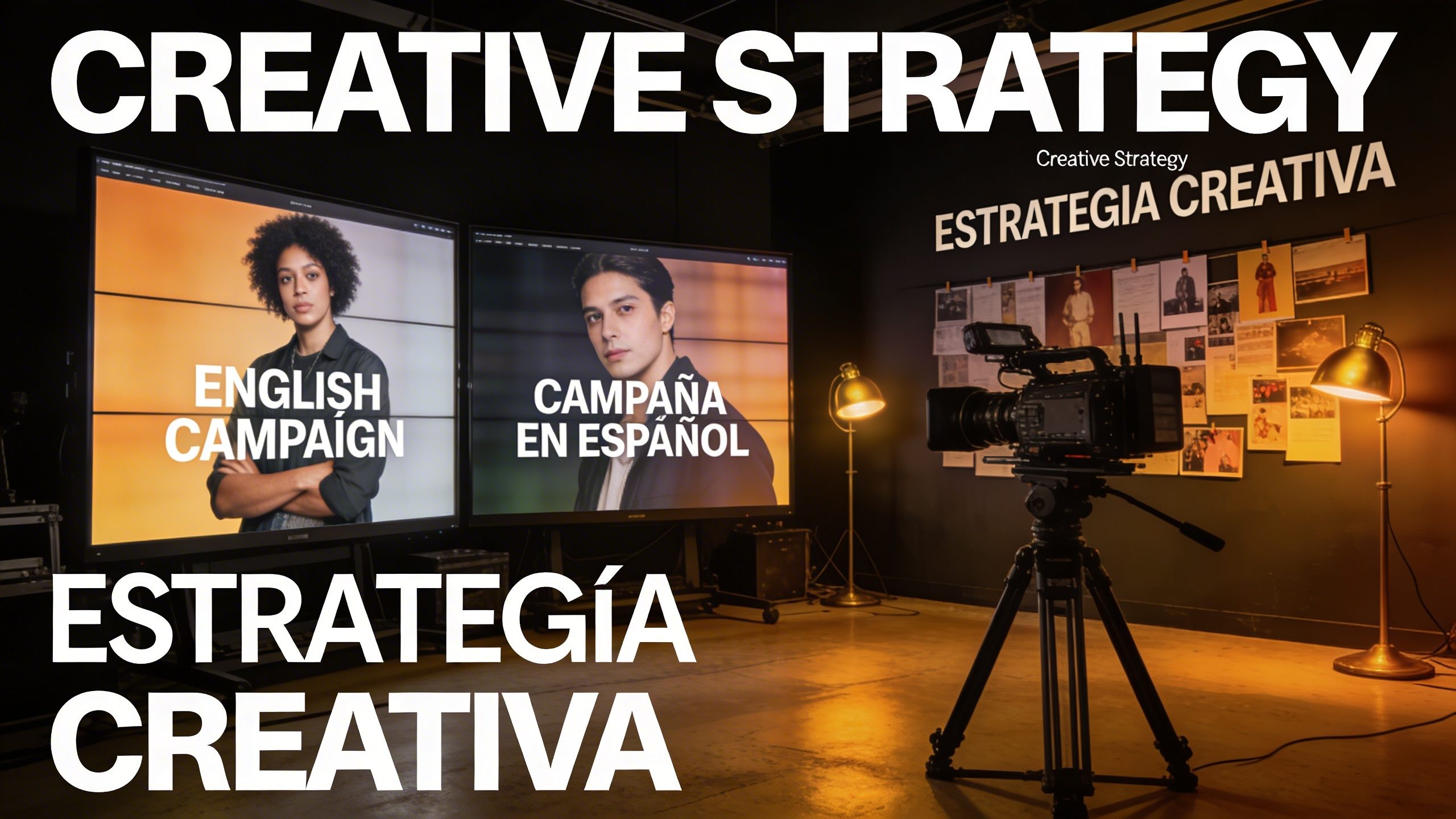
One of the most practical questions in bilingual marketing is also one of the least discussed: for any given piece of content, should it be in Spanish, English, or both? The default answer — "translate everything" — is wrong and expensive. The strategic answer requires understanding what each language does best in your specific context, for your specific audience.
Language is not neutral. Spanish does not just communicate differently — it signals belonging, trust, and cultural recognition in a way that English cannot replicate for Spanish-dominant audiences. English signals professionalism and broad accessibility in contexts where those qualities matter. Knowing when each signal is more valuable is the core skill of bilingual marketing strategy.
When Spanish Does the Heavy Lifting
Spanish is the stronger choice when the goal is emotional resonance, community belonging, or capturing search traffic from Spanish-dominant audiences. Specifically:
- Community content and social media directed at Spanish-dominant or first-generation audiences. If your audience skews toward people who came to the U.S. as adults, Spanish is almost always the primary language of trust.
- Cultural campaigns rooted in specific Latino experiences — diaspora identity, heritage, family, food, music. These land harder in Spanish because the cultural reference points are native to the language.
- Spanish-language SEO targeting specific regional or interest-based keywords. These searches are often less competitive and highly motivated — someone searching "agencia de marketing bilingüe en Ohio" is ready to hire.
- Customer service and support for Spanish-speaking clients. Nothing erodes trust faster than forcing a customer to navigate support in their second language.
When English Does the Heavy Lifting
English is the stronger choice when the goal is broad reach, corporate credibility, or content aimed at decision-makers who operate primarily in English regardless of their heritage. Specifically:
- B2B content aimed at business owners, procurement managers, or HR directors — even in companies with majority-Latino workforces, decisions are often made in English at the leadership level.
- Earned media and PR targeting English-language publications, podcasts, and industry outlets.
- Technical or legal content — contracts, terms, privacy policies, product documentation — where precision matters more than cultural resonance.
- Paid advertising on platforms where English targeting reaches a broader, more cost-efficient audience for your specific goal.
Use Spanish when...
- Audience is Spanish-dominant
- Goal is cultural belonging
- Targeting Spanish-language SEO
- Content is emotional or community-based
- Customer service / support
Use English when...
- Audience operates primarily in English
- Goal is broad reach or PR
- B2B content for decision-makers
- Technical, legal, or formal content
- Targeting mainstream media
When to Use Both
Bilingual content — not translation, but true dual-voice content — is the right choice when:
- Your audience is genuinely bilingual. Second-generation Latino consumers often code-switch naturally. Bilingual content mirrors how they actually communicate and feels native to their experience.
- You are building brand identity. A brand that exists authentically in both languages communicates something about who it is — not just who it is marketing to. This is the JinYer Balance model.
- The content is a long-term asset. Website pages, evergreen blog content, and brand videos are worth the investment of full bilingual production. Short-lived social posts may not be.
JinYer Balance creates content, websites, and campaigns in English and Spanish — not translations, but dual-voice work built to land natively in both markets.
Start a Bilingual ProjectThe Question That Drives the Decision
For every piece of content, ask: Who is the primary person I need to reach, and what language do they trust most? Not the language they can read. The language they trust. There is a difference. A second-generation Latino marketing director can read Spanish just fine — but they may make business decisions in English. A first-generation Dominican entrepreneur can read English — but they feel seen in Spanish in a way that English simply does not replicate.
Map your audience's language trust, not just their language capability, and your bilingual decisions will almost always make themselves.