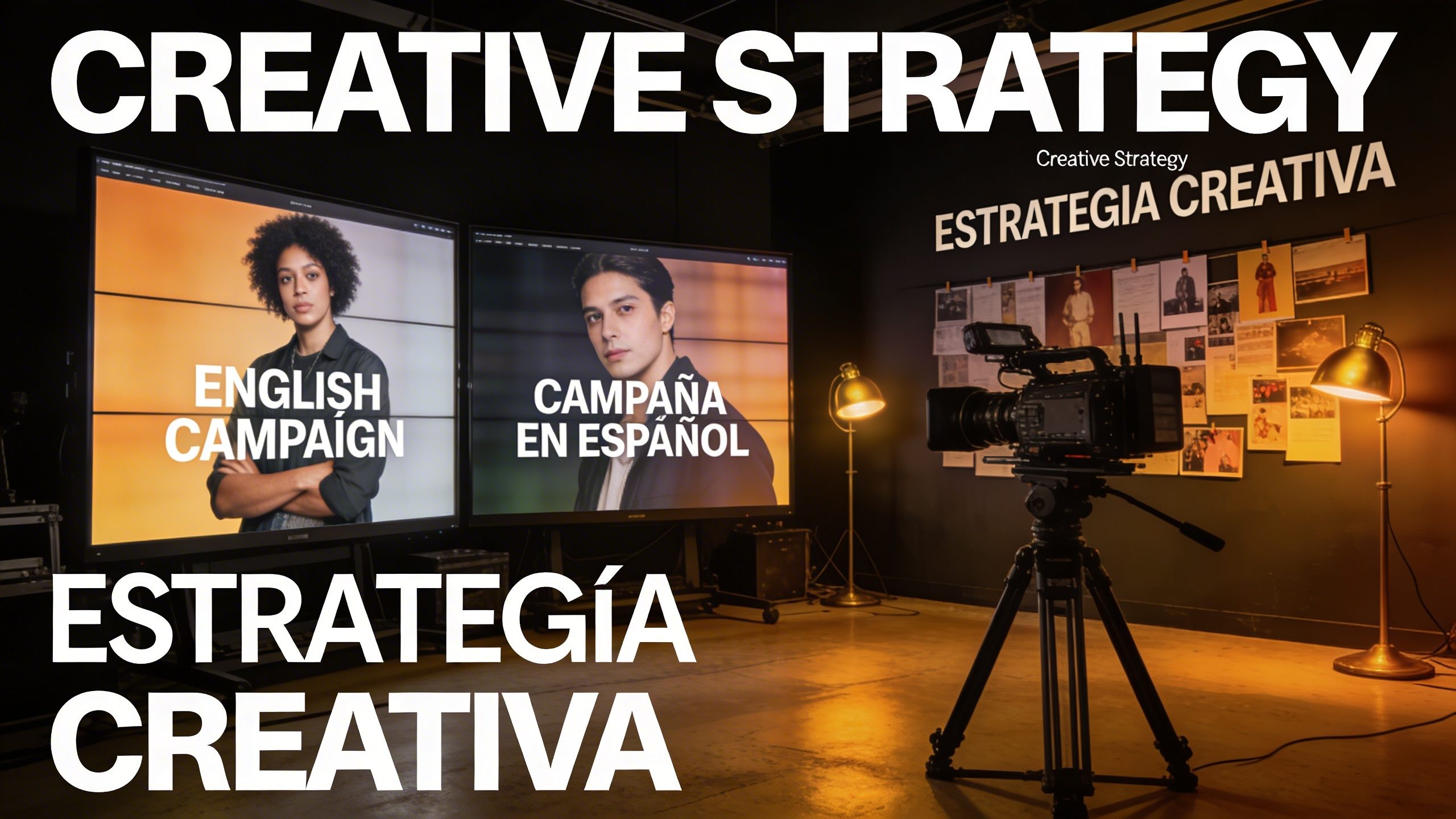
The U.S. Latino population represents over $3.4 trillion in purchasing power — a number larger than the GDP of most countries. Yet the majority of brands either ignore this audience entirely or produce clumsy Spanish translations that feel machine-generated and tone-deaf. The gap between those two failure modes is exactly where trust is built or lost.
Bilingual marketing is not about translating your English content into Spanish. It is about understanding who your audience is, where they live culturally, and what language — and tone — actually reaches them. Get this right and you build loyalty that compounds. Get it wrong and you get ignored, or worse, mocked.
$3.4 trillion — the annual purchasing power of U.S. Latino consumers, according to the Latino Donor Collaborative. It is projected to exceed $4 trillion by 2028.
Understand the Spectrum Before You Speak
The U.S. Latino community is not monolithic. A third-generation Puerto Rican in New York City, a first-generation Mexican-American in Texas, and a Colombian entrepreneur in Miami all have different cultural touchpoints, language preferences, and media habits. Before you write a single word of copy, you need to know:
- What generation are they? First-generation immigrants are often more Spanish-dominant. Second and third generation are often fully bilingual or English-dominant — but still culturally Latino.
- What is their country of origin? Mexican, Puerto Rican, Dominican, Cuban, Colombian — these are distinct cultures with different slang, references, and values. A campaign that lands in one community can fall flat or even offend in another.
- Where do they consume media? YouTube, Instagram, and TikTok have massive Spanish-language and bilingual creator ecosystems. Univision and Telemundo are still powerful. Local Spanish-language radio still reaches millions in key markets.
JinYer Balance creates content, video, and digital strategy in both English and Spanish — not translations, but parallel voices that feel native to each audience. Based in Puerto Rico. Built for the diaspora.
Start a Bilingual ProjectThe Translation Trap (and How to Avoid It)
Most brands fail at bilingual marketing because they treat Spanish as an afterthought. The English content gets approved, shipped, and then someone runs it through Google Translate or hands it to an intern who "took Spanish in high school." The result is content that technically uses Spanish words but sounds like no human being has ever spoken them.
The fix is not just better translation — it is parallel creation. Your Spanish content should be written in Spanish by someone who thinks in Spanish, using idioms and references that land naturally for your specific audience. This is especially true for:
- Video scripts — tone, pacing, and humor do not translate word-for-word. A bilingual video needs to feel culturally native in both versions.
- Social media captions — Spanish social copy has its own rhythm. Formal Spanish reads as cold; overly casual reads as disrespectful. Find the register that fits your brand.
- Headlines and CTAs — "Shop Now" becomes "Compra Ahora" in a dictionary. But a native speaker might write "Consíguelo ya" or "Llévalo hoy" depending on the product and audience.
SEO for Bilingual Audiences
Spanish-language search is a massive, underserved opportunity. Most brands competing for English keywords have deep-pocketed competitors. Spanish-language keywords often have significantly lower competition — and highly motivated searchers.
A few principles for bilingual SEO:
- Use
hreflangtags to signal to Google which version of your page is for which language/region. Without these, search engines may show the wrong version to the wrong audience. - Create native Spanish URLs —
/es/servicios.htmlperforms better than/services.html?lang=es. Separate URLs allow proper indexing. - Research Spanish-language keywords separately. Do not assume the Spanish translation of your English keyword is what people actually search. Use Google Keyword Planner in Spanish to find real search terms.
- Build content at both language levels. A bilingual blog (like this one) signals expertise to Google and creates twice the indexing surface area.
Cultural Resonance: What Actually Builds Trust
Language is the door. Culture is what makes people stay. Latino audiences are highly attuned to whether a brand genuinely understands their world or is just performing inclusion for optics. A few things that move the needle:
- Represent real people. Cast bilingual and Spanish-dominant talent in your video and photo production — not just as background extras, but as leads. Authentic representation is felt immediately.
- Acknowledge the diaspora experience. The tension between cultures — navigating two languages, two sets of expectations, two identities — is something the Latino community knows deeply. Brands that acknowledge this complexity earn lasting loyalty.
- Show up in community spaces. Sponsor local Latino events, partner with Latino-owned businesses, advertise in Spanish-language publications and podcasts. Presence in the community signals commitment in a way that a translated website never will.
- Do not disappear after Heritage Month. One of the fastest ways to destroy trust with Latino audiences is to show up in October for Hispanic Heritage Month and vanish for the rest of the year. Sustained presence matters.
78% of Latino adults in the U.S. say they are more likely to buy from a brand that advertises in Spanish, according to research by Nielsen.
Where to Start: A Practical Bilingual Marketing Checklist
- Audit your existing content — what percentage is available in Spanish?
- Define your primary Latino audience (country of origin, generation, region)
- Hire or partner with a native Spanish-speaking strategist or creative team
- Create parallel Spanish versions of your highest-traffic pages (not translations — rewrites)
- Add
hreflangtags and Spanish-language URLs to your site architecture - Research Spanish-language keywords for your core service or product categories
- Build one Spanish-language content piece per month — blog post, video, or social series
- Identify 3–5 Latino-focused publications, directories, or podcasts to pitch or advertise in
- Track Spanish-language traffic, conversions, and engagement separately in Google Analytics
You do not need to do all of this at once. The brands that win with Latino audiences are not the ones who launched a massive campaign — they are the ones who showed up consistently, respected the culture, and treated the audience as a primary market, not an afterthought.
At JinYer Balance, bilingual strategy is not a service we bolt on — it is how we work by default. Our team is rooted in Puerto Rican creative culture, fluent in both English and Spanish, and built to help brands speak to the full U.S. Latino spectrum with authenticity and precision.